
SMU Data and Models

August 10, 2014
SMU Key Market Indicator Data Point Moved to "Unsatisfactory"
Written by Peter Wright
If we start with the premise that the consumer is almost 70 percent of GDP and that steel consumption is closely correlated with GDP, then consumer behavior and, in particular, debt is very relevant to our future businesses. Consumer spending is driven by income and both the perception of current debt and willingness to take on more. The Federal Reserve reports of personal income and credit outstanding are important pieces of the jigsaw puzzle of steel demand, past present and future.
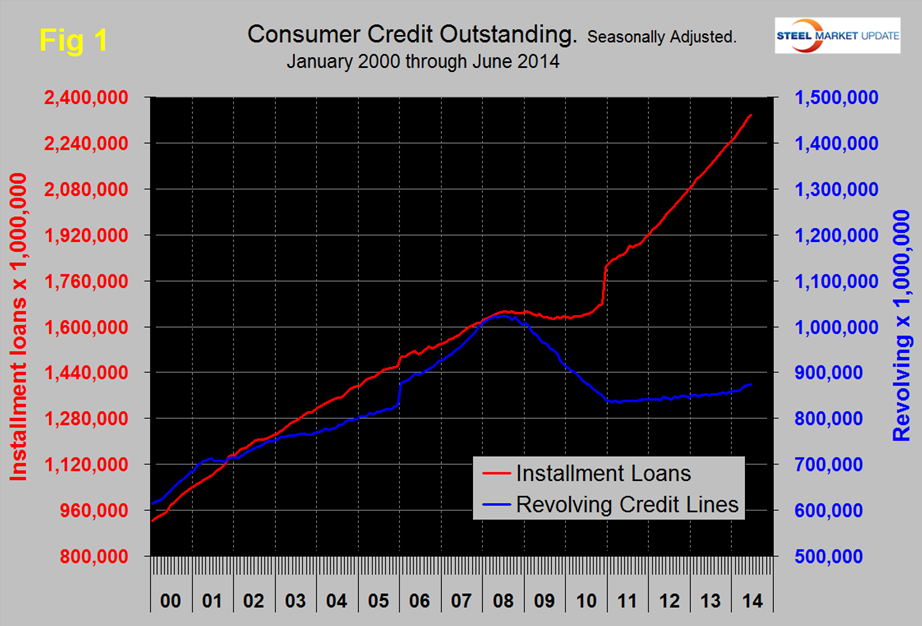
The change in the mix of consumer debt between installments (big ticket items) and revolving (credit cards) since the recession has been remarkable. In 30 months through June, installment loans have grown by 21.2 percent and revolving loans by only 3.8 percent, (Figure 1). Consumers have clearly learned their lesson regarding the predatory nature of credit card lending and this sector has barely expanded in over three years. Installment debt now stands at $2.3 trillion over half of which is for student loans.